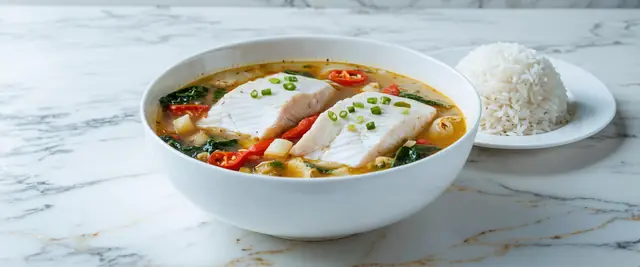
Fish with Tucupi Sauce (Peixe No Tucupi)
Amazonian fish simmers in tangy fermented cassava broth with garlic and chicory.
Dietary
Pescatarian, Wheat free, Dairy free, Nut free, Halal
Allergens
Fish
This Amazonian classic pairs firm white fish with tucupi, a tangy yellow broth made from fermented cassava juice, seasoned with garlic and jambu or chicory leaves. The broth carries a distinctive tartness and slight numbing quality that pairs well with steamed white rice. It's a traditional dish from Brazil's Pará and Amazonas regions, often served for a weekend family meal.
Ingredients
- 4 firm white fish fillets (such as tambaqui, pacu, or cod), about 6 ounces each
- 1 teaspoon salt
- 2 tablespoons lime juice
- 4 cups tucupi (fermented cassava broth)
- 4 cloves garlic, minced
- 1 medium onion, thinly sliced
- 1 chicory or jambu leaves, roughly chopped
- 2 chili peppers (malagueta or similar), whole
- 1 tablespoon vegetable oil
- 1/2 teaspoon black pepper
- 2 green onions, chopped, for garnish
- 4 cups cooked white rice, for serving
Method
-
Season the fish fillets with salt and lime juice, and let sit at room temperature while you prepare the broth.
-
In a 6-quart saucepan, heat the vegetable oil over medium heat and sauté the onion and garlic until softened and fragrant, about 4 minutes.
-
Pour in the tucupi and add the whole chili peppers and black pepper. Bring to a boil, then reduce heat and simmer 15 minutes to mellow the broth's sharpness.
-
Add the chopped chicory or jambu leaves to the broth and simmer 5 minutes more.
-
Nestle the fish fillets into the simmering broth, spooning liquid over the top. Cover and poach until the fish is opaque and flakes easily, 10 to 12 minutes.
-
Carefully transfer the fish to shallow serving bowls and ladle the hot tucupi broth with vegetables over each portion.
-
Garnish with chopped green onions and serve hot alongside cooked white rice.
Related recipes
Rate this recipe
Report this comment

Fish with Tucupi Sauce (Peixe No Tucupi)
This Amazonian classic pairs firm white fish with tucupi, a tangy yellow broth made from fermented cassava juice, seasoned with garlic and jambu or chicory leaves. The broth carries a distinctive tartness and slight numbing quality that pairs well with steamed white rice. It's a traditional dish from Brazil's Pará and Amazonas regions, often served for a weekend family meal.
50 min 4 servings 310 cal
Ingredients
- 4 firm white fish fillets (such as tambaqui, pacu, or cod), about 6 ounces each
- 1 teaspoon salt
- 2 tablespoons lime juice
- 4 cups tucupi (fermented cassava broth)
- 4 cloves garlic, minced
- 1 medium onion, thinly sliced
- 1 chicory or jambu leaves, roughly chopped
- 2 chili peppers (malagueta or similar), whole
- 1 tablespoon vegetable oil
- 1/2 teaspoon black pepper
- 2 green onions, chopped, for garnish
- 4 cups cooked white rice, for serving
Method
- 1
Season the fish fillets with salt and lime juice, and let sit at room temperature while you prepare the broth.
- 2
In a 6-quart saucepan, heat the vegetable oil over medium heat and sauté the onion and garlic until softened and fragrant, about 4 minutes.
- 3
Pour in the tucupi and add the whole chili peppers and black pepper. Bring to a boil, then reduce heat and simmer 15 minutes to mellow the broth's sharpness.
- 4
Add the chopped chicory or jambu leaves to the broth and simmer 5 minutes more.
- 5
Nestle the fish fillets into the simmering broth, spooning liquid over the top. Cover and poach until the fish is opaque and flakes easily, 10 to 12 minutes.
- 6
Carefully transfer the fish to shallow serving bowls and ladle the hot tucupi broth with vegetables over each portion.
- 7
Garnish with chopped green onions and serve hot alongside cooked white rice.
Comments
Log in to comment.