Gimbap (Korean Seaweed Rolls)
Seasoned rice and colorful fillings roll into tight, sliceable logs wrapped in crisp seaweed.
Dietary
Dairy free, Nut free, Halal
Allergens
Eggs, Soy, Sesame, Red meat
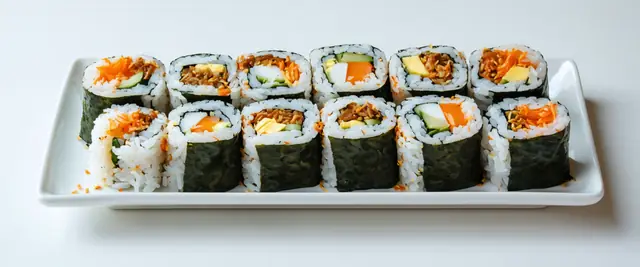
Gimbap layers sesame-seasoned rice with pickled radish, spinach, carrot, egg, and savory beef or imitation crab, all rolled tightly in dried seaweed sheets. Sliced into bite-sized rounds, it travels well and makes a satisfying lunchbox staple or picnic dish. The key to clean slices lies in firmly packed rolls and a sharp, lightly oiled knife.
Ingredients
- 3 cups cooked short-grain white rice, warm
- 2 tablespoons toasted sesame oil
- 1 teaspoon salt
- 1 tablespoon toasted sesame seeds
- 6 sheets dried seaweed (gim/nori), full size
- 6 ounces beef bulgogi, cooked and sliced into strips
- 1 cup pickled yellow radish (danmuji), cut into thin strips
- 1 cup carrot, julienned
- 2 cups fresh spinach, blanched and drained
- 1 teaspoon garlic, minced
- 4 eggs, beaten
- 1 tablespoon vegetable oil, for cooking
- 1/2 teaspoon soy sauce
- 1/2 teaspoon sugar
- 1 teaspoon toasted sesame oil, for rolling and brushing
- 0 salt, to taste, for spinach
Method
-
In a large bowl, toss the warm cooked rice with sesame oil, salt, and toasted sesame seeds until evenly coated. Set aside to cool slightly.
-
Season the blanched spinach with the minced garlic, 1/2 teaspoon sesame oil, and a pinch of salt, tossing well.
-
Heat vegetable oil in a 9-inch skillet over medium heat and pour in the beaten eggs, swirling to form a thin, even layer.
-
Cook the egg undisturbed until set, then flip carefully and cook the other side for 1 minute. Transfer to a cutting board, cool, and slice into long strips.
-
In the same skillet, sauté the julienned carrot over medium heat with a pinch of salt until just softened, about 2 minutes.
-
If the bulgogi is not already cooked, sauté the sliced beef with soy sauce and sugar in the skillet over medium-high heat until browned, 4 to 5 minutes, then set aside to cool slightly.
-
Lay one sheet of seaweed shiny-side down on a bamboo rolling mat, rough side facing up.
-
Spread a thin, even layer of seasoned rice over about three-quarters of the seaweed sheet, leaving the top edge bare.
-
Arrange small portions of egg, carrot, spinach, pickled radish, and bulgogi in a line across the center of the rice.
-
Using the mat, lift the bottom edge and roll firmly away from you, pressing gently to compact the fillings as you go, sealing the bare edge last.
-
Brush the outside of the roll lightly with sesame oil. Repeat rolling with the remaining seaweed sheets and fillings.
-
Using a sharp knife lightly coated with sesame oil, slice each roll into 8 to 10 even pieces, wiping the blade between cuts.
-
Arrange the gimbap slices on a platter and serve at room temperature.
Related recipes
Rate this recipe
Report this comment

Gimbap (Korean Seaweed Rolls)
Gimbap layers sesame-seasoned rice with pickled radish, spinach, carrot, egg, and savory beef or imitation crab, all rolled tightly in dried seaweed sheets. Sliced into bite-sized rounds, it travels well and makes a satisfying lunchbox staple or picnic dish. The key to clean slices lies in firmly packed rolls and a sharp, lightly oiled knife.
1 hr 20 min 4 servings 480 cal
Ingredients
- 3 cups cooked short-grain white rice, warm
- 2 tablespoons toasted sesame oil
- 1 teaspoon salt
- 1 tablespoon toasted sesame seeds
- 6 sheets dried seaweed (gim/nori), full size
- 6 ounces beef bulgogi, cooked and sliced into strips
- 1 cup pickled yellow radish (danmuji), cut into thin strips
- 1 cup carrot, julienned
- 2 cups fresh spinach, blanched and drained
- 1 teaspoon garlic, minced
- 4 eggs, beaten
- 1 tablespoon vegetable oil, for cooking
- 1/2 teaspoon soy sauce
- 1/2 teaspoon sugar
- 1 teaspoon toasted sesame oil, for rolling and brushing
- 0 salt, to taste, for spinach
Method
- 1
In a large bowl, toss the warm cooked rice with sesame oil, salt, and toasted sesame seeds until evenly coated. Set aside to cool slightly.
- 2
Season the blanched spinach with the minced garlic, 1/2 teaspoon sesame oil, and a pinch of salt, tossing well.
- 3
Heat vegetable oil in a 9-inch skillet over medium heat and pour in the beaten eggs, swirling to form a thin, even layer.
- 4
Cook the egg undisturbed until set, then flip carefully and cook the other side for 1 minute. Transfer to a cutting board, cool, and slice into long strips.
- 5
In the same skillet, sauté the julienned carrot over medium heat with a pinch of salt until just softened, about 2 minutes.
- 6
If the bulgogi is not already cooked, sauté the sliced beef with soy sauce and sugar in the skillet over medium-high heat until browned, 4 to 5 minutes, then set aside to cool slightly.
- 7
Lay one sheet of seaweed shiny-side down on a bamboo rolling mat, rough side facing up.
- 8
Spread a thin, even layer of seasoned rice over about three-quarters of the seaweed sheet, leaving the top edge bare.
- 9
Arrange small portions of egg, carrot, spinach, pickled radish, and bulgogi in a line across the center of the rice.
- 10
Using the mat, lift the bottom edge and roll firmly away from you, pressing gently to compact the fillings as you go, sealing the bare edge last.
- 11
Brush the outside of the roll lightly with sesame oil. Repeat rolling with the remaining seaweed sheets and fillings.
- 12
Using a sharp knife lightly coated with sesame oil, slice each roll into 8 to 10 even pieces, wiping the blade between cuts.
- 13
Arrange the gimbap slices on a platter and serve at room temperature.
Comments
Log in to comment.