Pav Rolls
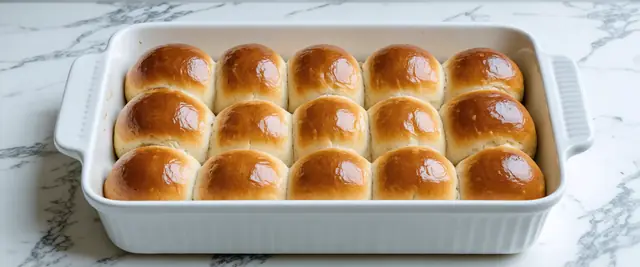
Soft, pillowy Indian dinner rolls baked side by side for pull-apart edges.
Dietary
Vegetarian, Pescatarian, Nut free, Halal, Kosher
Allergens
Dairy, Eggs, Wheat
Pav are the soft, slightly sweet milk-and-butter rolls that anchor street food favorites like vada pav and pav bhaji. Baked close together in a pan, they develop tender, feathery crumb and pale sides where they touch, with golden tops that get a butter brush straight from the oven. They keep well and freeze nicely for quick weeknight sides.
Ingredients
- 1 cup warm milk, about 110°F
- 2 1/4 teaspoons active dry yeast
- 1/4 cup granulated sugar
- 3 1/2 cups all-purpose flour
- 1 teaspoon salt
- 1 egg
- 3 tablespoons unsalted butter, softened
- 2 tablespoons unsalted butter, melted, for brushing
- 1 tablespoon milk, for brushing
Method
-
In a small bowl, stir together the warm milk, yeast, and sugar. Let stand until foamy on top, about 5 to 10 minutes.
-
In a large bowl or stand mixer, whisk together the flour and salt. Add the egg, softened butter, and the foamy yeast mixture.
-
Mix and knead on medium speed with a dough hook, or by hand on a floured surface, until the dough is smooth, soft, and elastic, about 8 to 10 minutes.
-
Shape the dough into a ball, place in a lightly greased bowl, cover with plastic wrap, and let rise in a warm spot until doubled in size.
-
Punch down the dough and turn it out onto a lightly floured surface. Divide into 12 equal pieces, about 2 1/2 ounces each, and shape each into a smooth, taut ball.
-
Arrange the dough balls in rows, almost touching, in a greased 9x13-inch baking pan.
-
Cover the pan loosely with plastic wrap or a kitchen towel and let the rolls rise until puffy and touching one another, about 45 minutes.
-
Preheat the oven to 350°F.
-
Brush the tops of the rolls gently with the tablespoon of milk.
-
Bake until the tops are golden brown and the rolls sound hollow when tapped, 18 to 20 minutes.
-
Remove from the oven and immediately brush the tops with the melted butter. Cool in the pan for 10 minutes, then transfer rolls to a wire rack, keeping them connected or gently pulling apart as desired.
Rate this recipe

Pav Rolls
Pav are the soft, slightly sweet milk-and-butter rolls that anchor street food favorites like vada pav and pav bhaji. Baked close together in a pan, they develop tender, feathery crumb and pale sides where they touch, with golden tops that get a butter brush straight from the oven. They keep well and freeze nicely for quick weeknight sides.
2 hr 50 min 12 rolls 185 cal
Ingredients
- 1 cup warm milk, about 110°F
- 2 1/4 teaspoons active dry yeast
- 1/4 cup granulated sugar
- 3 1/2 cups all-purpose flour
- 1 teaspoon salt
- 1 egg
- 3 tablespoons unsalted butter, softened
- 2 tablespoons unsalted butter, melted, for brushing
- 1 tablespoon milk, for brushing
Method
- 1
In a small bowl, stir together the warm milk, yeast, and sugar. Let stand until foamy on top, about 5 to 10 minutes.
- 2
In a large bowl or stand mixer, whisk together the flour and salt. Add the egg, softened butter, and the foamy yeast mixture.
- 3
Mix and knead on medium speed with a dough hook, or by hand on a floured surface, until the dough is smooth, soft, and elastic, about 8 to 10 minutes.
- 4
Shape the dough into a ball, place in a lightly greased bowl, cover with plastic wrap, and let rise in a warm spot until doubled in size.
- 5
Punch down the dough and turn it out onto a lightly floured surface. Divide into 12 equal pieces, about 2 1/2 ounces each, and shape each into a smooth, taut ball.
- 6
Arrange the dough balls in rows, almost touching, in a greased 9x13-inch baking pan.
- 7
Cover the pan loosely with plastic wrap or a kitchen towel and let the rolls rise until puffy and touching one another, about 45 minutes.
- 8
Preheat the oven to 350°F.
- 9
Brush the tops of the rolls gently with the tablespoon of milk.
- 10
Bake until the tops are golden brown and the rolls sound hollow when tapped, 18 to 20 minutes.
- 11
Remove from the oven and immediately brush the tops with the melted butter. Cool in the pan for 10 minutes, then transfer rolls to a wire rack, keeping them connected or gently pulling apart as desired.