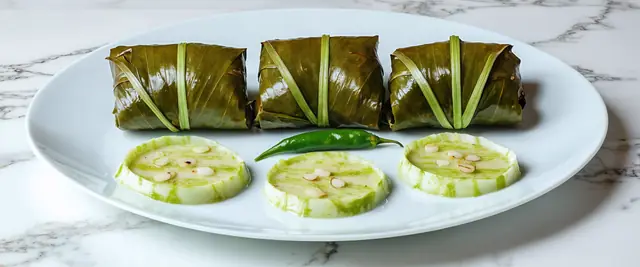
Pinangat (Taro Leaves Wrapped Fish)
Taro leaves simmered slowly in coconut milk until silky, tucked around tender fish and tangy fruit.
Dietary
Pescatarian, Wheat free, Dairy free, Halal
Allergens
Fish, Shellfish, Tree nuts
This Bicolano dish bundles small fish and souring fruit inside taro leaves, then simmers everything in coconut milk until the leaves turn tender and creamy. Slow, low heat is essential, since undercooked taro leaves can itch the throat. It makes a comforting main dish served with steamed rice.
Ingredients
- 30 taro leaves, washed and stems trimmed
- 1 pound small whole fish or fish steaks (such as sardines or yellowfin tuna), cleaned
- 2 cups coconut milk
- 1 cup coconut cream
- 2 pieces finger chilies (siling haba)
- 1 piece unripe green papaya or green mango, sliced thin
- 1 piece onion, sliced
- 4 cloves garlic, crushed
- 1 piece ginger, thinly sliced (about 1-inch piece)
- 1 tablespoon shrimp paste (bagoong alamang)
- 1 teaspoon salt
- 0 freshly ground black pepper, to taste
Method
-
Lay several taro leaves flat and overlapping on a work surface to form a wide base for wrapping.
-
Season the fish lightly with salt, then place it in the center of the taro leaves along with a few slices of onion, garlic, ginger, and papaya.
-
Spoon the shrimp paste over the fish, then fold the taro leaves tightly around the filling to form a compact bundle, tucking the ends underneath.
-
Repeat with the remaining leaves and fish to form 3 to 4 bundles total, tying each with kitchen twine or a strip of leaf stem if needed to hold its shape.
-
Arrange the remaining sliced onion, garlic, ginger, and any leftover papaya in the bottom of a 6-quart saucepan to form a bed.
-
Place the taro leaf bundles on top of the aromatic bed, then pour the coconut milk over them, adding water if needed so the bundles are mostly submerged.
-
Bring to a gentle boil over medium heat, then reduce the heat to low, cover, and simmer undisturbed.
-
Pour in the coconut cream and add the finger chilies, nestling them between the bundles without stirring vigorously, which can tear the leaves.
-
Continue simmering uncovered over low heat until the taro leaves are fully tender and the sauce has thickened slightly.
-
Season with salt and pepper to taste, then carefully transfer the bundles to a serving platter and spoon the thickened coconut sauce over the top.
-
Let the pinangat rest for a few minutes to settle before serving warm with steamed rice.
Related recipes
Rate this recipe
Report this comment

Pinangat (Taro Leaves Wrapped Fish)
This Bicolano dish bundles small fish and souring fruit inside taro leaves, then simmers everything in coconut milk until the leaves turn tender and creamy. Slow, low heat is essential, since undercooked taro leaves can itch the throat. It makes a comforting main dish served with steamed rice.
1 hr 55 min 4 servings 345 cal
Ingredients
- 30 taro leaves, washed and stems trimmed
- 1 pound small whole fish or fish steaks (such as sardines or yellowfin tuna), cleaned
- 2 cups coconut milk
- 1 cup coconut cream
- 2 pieces finger chilies (siling haba)
- 1 piece unripe green papaya or green mango, sliced thin
- 1 piece onion, sliced
- 4 cloves garlic, crushed
- 1 piece ginger, thinly sliced (about 1-inch piece)
- 1 tablespoon shrimp paste (bagoong alamang)
- 1 teaspoon salt
- 0 freshly ground black pepper, to taste
Method
- 1
Lay several taro leaves flat and overlapping on a work surface to form a wide base for wrapping.
- 2
Season the fish lightly with salt, then place it in the center of the taro leaves along with a few slices of onion, garlic, ginger, and papaya.
- 3
Spoon the shrimp paste over the fish, then fold the taro leaves tightly around the filling to form a compact bundle, tucking the ends underneath.
- 4
Repeat with the remaining leaves and fish to form 3 to 4 bundles total, tying each with kitchen twine or a strip of leaf stem if needed to hold its shape.
- 5
Arrange the remaining sliced onion, garlic, ginger, and any leftover papaya in the bottom of a 6-quart saucepan to form a bed.
- 6
Place the taro leaf bundles on top of the aromatic bed, then pour the coconut milk over them, adding water if needed so the bundles are mostly submerged.
- 7
Bring to a gentle boil over medium heat, then reduce the heat to low, cover, and simmer undisturbed.
- 8
Pour in the coconut cream and add the finger chilies, nestling them between the bundles without stirring vigorously, which can tear the leaves.
- 9
Continue simmering uncovered over low heat until the taro leaves are fully tender and the sauce has thickened slightly.
- 10
Season with salt and pepper to taste, then carefully transfer the bundles to a serving platter and spoon the thickened coconut sauce over the top.
- 11
Let the pinangat rest for a few minutes to settle before serving warm with steamed rice.
Comments
Log in to comment.