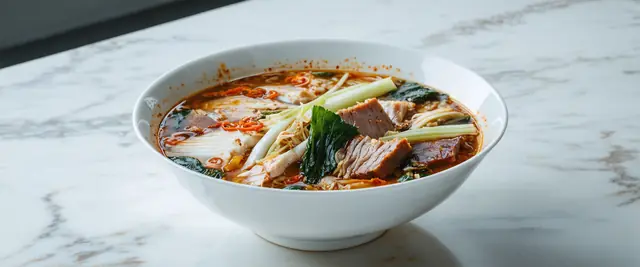
Pork Bone Soup (Gamjatang)
Smoky pork spine bones simmer with potatoes and perilla in a spicy, deeply savory Korean broth.
Dietary
Dairy free, Nut free
Allergens
Soy, Red meat
Gamjatang is a Korean comfort stew built on richly seasoned pork spine bones, simmered for hours until the broth turns deep and savory. Potatoes, napa cabbage, and perilla leaves round out the pot, while a gochugaru-based paste delivers steady, warming heat. It's a cold-weather favorite, often shared straight from a bubbling pot at the table.
Ingredients
- 3 pounds pork spine bones (gamjatang-yong bones), cut for stewing
- 1 yellow onion, halved
- 6 cloves garlic, peeled
- 1 piece ginger (2-inch), sliced
- 4 green onions, cut into thirds
- 1 tablespoon whole black peppercorns
- 16 cups water
- 3 medium russet potatoes, peeled and halved
- 1/2 head napa cabbage, cut into large pieces
- 1 cup perilla leaves, roughly torn
- 1 cup bean sprouts
- 1/2 cup gochugaru (Korean red chili flakes)
- 3 tablespoons doenjang (fermented soybean paste)
- 2 tablespoons gochujang (Korean chili paste)
- 2 tablespoons minced garlic
- 1 tablespoon minced ginger
- 1 tablespoon soy sauce
- 1 tablespoon perilla seed powder (deulkkae-garu)
- 1 teaspoon ground black pepper
- 2 green onions, sliced, for garnish
- 1 teaspoon salt, or to taste
Method
-
Place the pork spine bones in a large stock pot and cover with cold water. Soak for 1 hour, changing the water once, to draw out blood and impurities.
-
Drain the bones and place them in a large pot. Cover with water, bring to a boil over high heat, and boil for 5 minutes to release scum.
-
Drain the bones and rinse them well under cold running water, scrubbing off any clinging foam and residue.
-
Return the bones to a clean 12-quart stock pot with the onion, 6 whole garlic cloves, sliced ginger, green onion pieces, peppercorns, and 16 cups water. Bring to a boil over high heat.
-
Reduce heat to low, cover partially, and simmer for 2 1/2 hours, skimming any foam occasionally, until the broth is rich and the meat is tender.
-
In a small bowl, whisk together the gochugaru, doenjang, gochujang, minced garlic, minced ginger, soy sauce, perilla seed powder, and black pepper to form a seasoning paste.
-
Strain the broth if desired, or leave the bones and aromatics in the pot, removing the onion, ginger, and green onion pieces. Stir the seasoning paste into the broth.
-
Add the potatoes to the pot and simmer over medium heat for 20 minutes, until the potatoes are nearly fork-tender.
-
Add the napa cabbage and bean sprouts, and simmer for 10 minutes more until the vegetables soften.
-
Stir in the perilla leaves and season with salt to taste. Simmer 2 minutes more to wilt the leaves.
-
Ladle the soup into bowls, making sure each serving gets bones, potato, and vegetables. Garnish with sliced green onions and serve hot with steamed rice.
Related recipes
Rate this recipe
Report this comment

Pork Bone Soup (Gamjatang)
Gamjatang is a Korean comfort stew built on richly seasoned pork spine bones, simmered for hours until the broth turns deep and savory. Potatoes, napa cabbage, and perilla leaves round out the pot, while a gochugaru-based paste delivers steady, warming heat. It's a cold-weather favorite, often shared straight from a bubbling pot at the table.
4 hr 6 servings 420 cal
Ingredients
- 3 pounds pork spine bones (gamjatang-yong bones), cut for stewing
- 1 yellow onion, halved
- 6 cloves garlic, peeled
- 1 piece ginger (2-inch), sliced
- 4 green onions, cut into thirds
- 1 tablespoon whole black peppercorns
- 16 cups water
- 3 medium russet potatoes, peeled and halved
- 1/2 head napa cabbage, cut into large pieces
- 1 cup perilla leaves, roughly torn
- 1 cup bean sprouts
- 1/2 cup gochugaru (Korean red chili flakes)
- 3 tablespoons doenjang (fermented soybean paste)
- 2 tablespoons gochujang (Korean chili paste)
- 2 tablespoons minced garlic
- 1 tablespoon minced ginger
- 1 tablespoon soy sauce
- 1 tablespoon perilla seed powder (deulkkae-garu)
- 1 teaspoon ground black pepper
- 2 green onions, sliced, for garnish
- 1 teaspoon salt, or to taste
Method
- 1
Place the pork spine bones in a large stock pot and cover with cold water. Soak for 1 hour, changing the water once, to draw out blood and impurities.
- 2
Drain the bones and place them in a large pot. Cover with water, bring to a boil over high heat, and boil for 5 minutes to release scum.
- 3
Drain the bones and rinse them well under cold running water, scrubbing off any clinging foam and residue.
- 4
Return the bones to a clean 12-quart stock pot with the onion, 6 whole garlic cloves, sliced ginger, green onion pieces, peppercorns, and 16 cups water. Bring to a boil over high heat.
- 5
Reduce heat to low, cover partially, and simmer for 2 1/2 hours, skimming any foam occasionally, until the broth is rich and the meat is tender.
- 6
In a small bowl, whisk together the gochugaru, doenjang, gochujang, minced garlic, minced ginger, soy sauce, perilla seed powder, and black pepper to form a seasoning paste.
- 7
Strain the broth if desired, or leave the bones and aromatics in the pot, removing the onion, ginger, and green onion pieces. Stir the seasoning paste into the broth.
- 8
Add the potatoes to the pot and simmer over medium heat for 20 minutes, until the potatoes are nearly fork-tender.
- 9
Add the napa cabbage and bean sprouts, and simmer for 10 minutes more until the vegetables soften.
- 10
Stir in the perilla leaves and season with salt to taste. Simmer 2 minutes more to wilt the leaves.
- 11
Ladle the soup into bowls, making sure each serving gets bones, potato, and vegetables. Garnish with sliced green onions and serve hot with steamed rice.
Comments
Log in to comment.