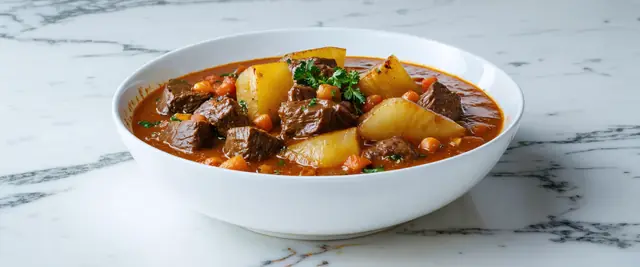
Quince Stew (Khoresh-e Beh)
Tender beef simmers with golden quince and tart split peas in a saffron-tinted sauce.
Dietary
Wheat free, Nut free, Halal
Allergens
Dairy, Red meat
This Persian stew pairs seared beef with caramelized quince wedges, split peas, and a touch of saffron and cinnamon for a sweet-savory balance. Simmered slowly until the meat is tender and the quince softens into the sauce, it's a cold-weather dish traditionally served over steamed basmati rice.
Ingredients
- 2 pounds beef stew meat, cut into 1 1/2-inch cubes
- 2 tablespoons vegetable oil
- 2 yellow onions, thinly sliced
- 1 teaspoon ground turmeric
- 1 teaspoon ground cinnamon
- 1/2 teaspoon ground black pepper
- 1 teaspoon salt, plus more to taste
- 4 cups water
- 1/2 cup yellow split peas, rinsed
- 2 quinces, peeled, cored, and cut into wedges
- 2 tablespoons tomato paste
- 2 tablespoons fresh lemon juice
- 2 tablespoons granulated sugar
- 1/4 teaspoon saffron threads, crushed and dissolved in 2 tablespoons hot water
- 1 tablespoon butter
Method
-
Heat the vegetable oil in a 6-quart saucepan over medium-high heat. Add the beef in batches and brown on all sides, about 8 minutes per batch, then transfer to a plate.
-
Add the sliced onions to the pot and cook, stirring occasionally, until softened and golden, about 8 minutes.
-
Stir in the turmeric, cinnamon, black pepper, and salt, and cook for 1 minute until fragrant.
-
Return the browned beef to the pot, add the water and split peas, and bring to a boil.
-
Reduce heat to low, cover, and simmer until the beef is nearly tender, about 1 hour, stirring occasionally.
-
While the stew simmers, heat a 9-inch skillet over medium heat and lightly brown the quince wedges in the butter on both sides, about 6 minutes total.
-
Stir the tomato paste, lemon juice, sugar, and dissolved saffron into the stew pot.
-
Add the browned quince wedges to the pot, cover, and simmer until the quince is tender and the sauce has thickened, about 45 minutes.
-
Taste and adjust salt, sugar, or lemon juice as needed. Serve hot over steamed basmati rice.
Rate this recipe
Report this comment

Quince Stew (Khoresh-e Beh)
This Persian stew pairs seared beef with caramelized quince wedges, split peas, and a touch of saffron and cinnamon for a sweet-savory balance. Simmered slowly until the meat is tender and the quince softens into the sauce, it's a cold-weather dish traditionally served over steamed basmati rice.
2 hr 25 min 6 servings 410 cal
Ingredients
- 2 pounds beef stew meat, cut into 1 1/2-inch cubes
- 2 tablespoons vegetable oil
- 2 yellow onions, thinly sliced
- 1 teaspoon ground turmeric
- 1 teaspoon ground cinnamon
- 1/2 teaspoon ground black pepper
- 1 teaspoon salt, plus more to taste
- 4 cups water
- 1/2 cup yellow split peas, rinsed
- 2 quinces, peeled, cored, and cut into wedges
- 2 tablespoons tomato paste
- 2 tablespoons fresh lemon juice
- 2 tablespoons granulated sugar
- 1/4 teaspoon saffron threads, crushed and dissolved in 2 tablespoons hot water
- 1 tablespoon butter
Method
- 1
Heat the vegetable oil in a 6-quart saucepan over medium-high heat. Add the beef in batches and brown on all sides, about 8 minutes per batch, then transfer to a plate.
- 2
Add the sliced onions to the pot and cook, stirring occasionally, until softened and golden, about 8 minutes.
- 3
Stir in the turmeric, cinnamon, black pepper, and salt, and cook for 1 minute until fragrant.
- 4
Return the browned beef to the pot, add the water and split peas, and bring to a boil.
- 5
Reduce heat to low, cover, and simmer until the beef is nearly tender, about 1 hour, stirring occasionally.
- 6
While the stew simmers, heat a 9-inch skillet over medium heat and lightly brown the quince wedges in the butter on both sides, about 6 minutes total.
- 7
Stir the tomato paste, lemon juice, sugar, and dissolved saffron into the stew pot.
- 8
Add the browned quince wedges to the pot, cover, and simmer until the quince is tender and the sauce has thickened, about 45 minutes.
- 9
Taste and adjust salt, sugar, or lemon juice as needed. Serve hot over steamed basmati rice.
Comments
Log in to comment.