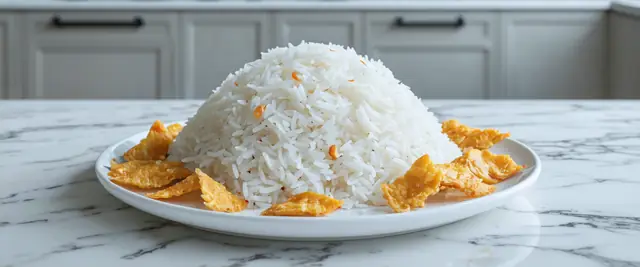
Saffron Rice with Tahdig (Chelow)
Basmati rice parboiled then steamed over a golden, crackling crust of crisped bottom rice.
Dietary
Vegetarian, Pescatarian, Wheat free, Nut free, Halal, Kosher
Allergens
Dairy
Chelow is the everyday Persian rice that becomes extraordinary at the bottom of the pot, where butter, oil, and yogurt fuse with rice into tahdig, a shatteringly crisp golden crust. Saffron bloomed in hot water perfumes and colors a portion of the rice, which is layered back in for color and fragrance. Serve alongside stews like ghormeh sabzi or khoresh, with the tahdig broken into shards for everyone to share.
Ingredients
- 3 cups basmati rice
- 1/4 cup fine sea salt, for parboiling water
- 1/4 teaspoon saffron threads
- 3 tablespoons hot water, for blooming saffron
- 6 tablespoons unsalted butter, melted
- 1/4 cup vegetable oil
- 3 tablespoons plain whole-milk yogurt
- 2 tablespoons water
- 1 teaspoon salt, for seasoning rice
Method
-
Rinse the basmati rice in a bowl under cold water, swirling and draining 4 to 5 times until the water runs mostly clear. Cover with cold water and soak for 30 minutes, then drain.
-
Combine the saffron threads with the hot water in a small bowl and let steep until deeply colored.
-
Fill a 6-quart saucepan two-thirds full with water, add the 1/4 cup salt, and bring to a rolling boil over high heat.
-
Add the drained rice to the boiling water and parboil, stirring occasionally, until the grains are softened on the outside but still firm at the core, 5 to 6 minutes.
-
Drain the rice immediately in a fine-mesh strainer and rinse briefly with lukewarm water to stop the cooking.
-
In a small bowl, stir together the yogurt, 2 tablespoons water, 2 tablespoons of the melted butter, and 2 tablespoons of the bloomed saffron water.
-
Spread the yogurt mixture evenly over the bottom of a 9-inch nonstick pot. Scoop about 1 1/2 cups of the parboiled rice over the yogurt layer and press gently to form an even base layer for the tahdig.
-
Mound the remaining rice over the base layer in a pyramid shape, sprinkling the 1 teaspoon salt between layers as you go, and avoid pressing it down.
-
Drizzle the remaining vegetable oil and melted butter over the rice mound, then pour the remaining bloomed saffron water over one section of the rice, leaving the rest pale.
-
Wrap the pot lid in a clean kitchen towel to absorb steam and cover the pot tightly. Cook over medium-high heat for 8 to 10 minutes until steam rises forcefully from the lid.
-
Reduce the heat to low and steam the rice undisturbed until the tahdig crust is golden and crisp, about 45 minutes.
-
Remove the pot from heat and let it rest, still covered, on a damp towel for 5 minutes to help release the crust.
-
Scoop the fluffy saffron-streaked rice onto a serving platter, mounding it loosely and folding in the saffron-colored portion for marbled color.
-
Loosen the tahdig from the pot edges with a spatula, invert or lift out in shards, and arrange the golden crust around or on top of the rice before serving.
Rate this recipe
Report this comment

Saffron Rice with Tahdig (Chelow)
Chelow is the everyday Persian rice that becomes extraordinary at the bottom of the pot, where butter, oil, and yogurt fuse with rice into tahdig, a shatteringly crisp golden crust. Saffron bloomed in hot water perfumes and colors a portion of the rice, which is layered back in for color and fragrance. Serve alongside stews like ghormeh sabzi or khoresh, with the tahdig broken into shards for everyone to share.
2 hr 6 servings 410 cal
Ingredients
- 3 cups basmati rice
- 1/4 cup fine sea salt, for parboiling water
- 1/4 teaspoon saffron threads
- 3 tablespoons hot water, for blooming saffron
- 6 tablespoons unsalted butter, melted
- 1/4 cup vegetable oil
- 3 tablespoons plain whole-milk yogurt
- 2 tablespoons water
- 1 teaspoon salt, for seasoning rice
Method
- 1
Rinse the basmati rice in a bowl under cold water, swirling and draining 4 to 5 times until the water runs mostly clear. Cover with cold water and soak for 30 minutes, then drain.
- 2
Combine the saffron threads with the hot water in a small bowl and let steep until deeply colored.
- 3
Fill a 6-quart saucepan two-thirds full with water, add the 1/4 cup salt, and bring to a rolling boil over high heat.
- 4
Add the drained rice to the boiling water and parboil, stirring occasionally, until the grains are softened on the outside but still firm at the core, 5 to 6 minutes.
- 5
Drain the rice immediately in a fine-mesh strainer and rinse briefly with lukewarm water to stop the cooking.
- 6
In a small bowl, stir together the yogurt, 2 tablespoons water, 2 tablespoons of the melted butter, and 2 tablespoons of the bloomed saffron water.
- 7
Spread the yogurt mixture evenly over the bottom of a 9-inch nonstick pot. Scoop about 1 1/2 cups of the parboiled rice over the yogurt layer and press gently to form an even base layer for the tahdig.
- 8
Mound the remaining rice over the base layer in a pyramid shape, sprinkling the 1 teaspoon salt between layers as you go, and avoid pressing it down.
- 9
Drizzle the remaining vegetable oil and melted butter over the rice mound, then pour the remaining bloomed saffron water over one section of the rice, leaving the rest pale.
- 10
Wrap the pot lid in a clean kitchen towel to absorb steam and cover the pot tightly. Cook over medium-high heat for 8 to 10 minutes until steam rises forcefully from the lid.
- 11
Reduce the heat to low and steam the rice undisturbed until the tahdig crust is golden and crisp, about 45 minutes.
- 12
Remove the pot from heat and let it rest, still covered, on a damp towel for 5 minutes to help release the crust.
- 13
Scoop the fluffy saffron-streaked rice onto a serving platter, mounding it loosely and folding in the saffron-colored portion for marbled color.
- 14
Loosen the tahdig from the pot edges with a spatula, invert or lift out in shards, and arrange the golden crust around or on top of the rice before serving.
Comments
Log in to comment.