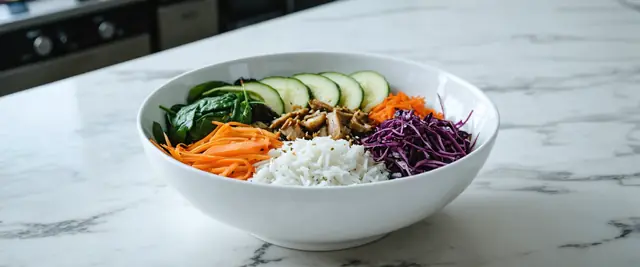
Vegan Bibimbap with Kimchi
Warm rice, crisp-tender vegetables, and tangy fermented kimchi come together in one bowl.
Dietary
Vegan, Vegetarian, Pescatarian, Dairy free, Nut free, Halal, Kosher
Allergens
Soy, Sesame
This plant-based take on bibimbap layers seasoned vegetables, crispy pan-fried tofu, and spicy homemade kimchi over warm rice, finished with a drizzle of gochujang sauce. The kimchi ferments for a few days ahead of time, so plan accordingly, but the bowl itself comes together quickly on busy weeknights. It's a satisfying, customizable dinner that balances heat, crunch, and umami.
Ingredients
- 1/2 head napa cabbage, cut into 2-inch pieces
- 3 tablespoons sea salt
- 4 cups water
- 3 tablespoons gochugaru (Korean chili flakes)
- 2 tablespoons rice flour
- 1/4 cup water, for rice flour slurry
- 1 tablespoon sugar
- 4 cloves garlic, minced
- 1 tablespoon fresh ginger, grated
- 2 tablespoons soy sauce
- 1 carrot, julienned
- 3 scallions, cut into 1-inch pieces
- 2 cups cooked short-grain rice
- 14 ounces extra-firm tofu, pressed and cubed
- 2 tablespoons cornstarch
- 4 tablespoons vegetable oil
- 1 zucchini, julienned
- 1 cup bean sprouts
- 1 cup spinach
- 1 cup shiitake mushrooms, sliced
- 4 teaspoons toasted sesame oil
- 2 teaspoons toasted sesame seeds
- 1/2 teaspoon salt
- 4 tablespoons gochujang (Korean chili paste)
Method
-
Toss the napa cabbage pieces with sea salt in a large bowl, then add the water and let sit, tossing occasionally, until the cabbage softens.
-
Drain the cabbage and rinse thoroughly under cold water two to three times, then squeeze out excess moisture.
-
In a small bowl, whisk the rice flour into 1/4 cup water and microwave or simmer in a small saucepan over medium heat, stirring, until it thickens into a paste.
-
Stir the sugar, garlic, ginger, soy sauce, and gochugaru into the warm rice flour paste to form a thick kimchi paste.
-
Combine the drained cabbage, carrot, and scallions in a large bowl, then add the kimchi paste and massage it into the vegetables with gloved hands until evenly coated.
-
Pack the kimchi tightly into a clean jar, pressing down to remove air pockets, leaving 1 inch of headspace, and seal loosely.
-
Let the kimchi ferment at room temperature, pressing down daily to keep it submerged in its liquid, until it tastes tangy.
-
Transfer the kimchi to the refrigerator and chill before serving.
-
Toss the cubed tofu with cornstarch until evenly coated.
-
Heat 2 tablespoons vegetable oil in a 9-inch skillet over medium-high heat and fry the tofu, turning occasionally, until golden and crisp on all sides.
-
Remove the tofu and set aside, then wipe out the skillet.
-
Heat 1/2 tablespoon oil in the skillet over medium heat and sauté the zucchini with a pinch of salt until just tender, about 3 minutes, then remove and set aside.
-
In the same skillet, sauté the shiitake mushrooms with a pinch of salt until softened and browned, about 4 minutes, then remove and set aside.
-
Blanch the bean sprouts in boiling water for 1 minute, drain, and toss with 1 teaspoon sesame oil and a pinch of salt.
-
Blanch the spinach in the same boiling water for 30 seconds, drain, squeeze out excess water, and toss with 1 teaspoon sesame oil and a pinch of salt.
-
Divide the warm rice among four bowls.
-
Arrange the tofu, zucchini, mushrooms, bean sprouts, spinach, and a generous scoop of kimchi in separate sections over the rice in each bowl.
-
Drizzle each bowl with 1 tablespoon gochujang and 1 teaspoon sesame oil, then sprinkle with toasted sesame seeds before serving.
Related recipes
Rate this recipe
Report this comment

Vegan Bibimbap with Kimchi
This plant-based take on bibimbap layers seasoned vegetables, crispy pan-fried tofu, and spicy homemade kimchi over warm rice, finished with a drizzle of gochujang sauce. The kimchi ferments for a few days ahead of time, so plan accordingly, but the bowl itself comes together quickly on busy weeknights. It's a satisfying, customizable dinner that balances heat, crunch, and umami.
Make ahead 4 servings 480 cal
Ingredients
- 1/2 head napa cabbage, cut into 2-inch pieces
- 3 tablespoons sea salt
- 4 cups water
- 3 tablespoons gochugaru (Korean chili flakes)
- 2 tablespoons rice flour
- 1/4 cup water, for rice flour slurry
- 1 tablespoon sugar
- 4 cloves garlic, minced
- 1 tablespoon fresh ginger, grated
- 2 tablespoons soy sauce
- 1 carrot, julienned
- 3 scallions, cut into 1-inch pieces
- 2 cups cooked short-grain rice
- 14 ounces extra-firm tofu, pressed and cubed
- 2 tablespoons cornstarch
- 4 tablespoons vegetable oil
- 1 zucchini, julienned
- 1 cup bean sprouts
- 1 cup spinach
- 1 cup shiitake mushrooms, sliced
- 4 teaspoons toasted sesame oil
- 2 teaspoons toasted sesame seeds
- 1/2 teaspoon salt
- 4 tablespoons gochujang (Korean chili paste)
Method
- 1
Toss the napa cabbage pieces with sea salt in a large bowl, then add the water and let sit, tossing occasionally, until the cabbage softens.
- 2
Drain the cabbage and rinse thoroughly under cold water two to three times, then squeeze out excess moisture.
- 3
In a small bowl, whisk the rice flour into 1/4 cup water and microwave or simmer in a small saucepan over medium heat, stirring, until it thickens into a paste.
- 4
Stir the sugar, garlic, ginger, soy sauce, and gochugaru into the warm rice flour paste to form a thick kimchi paste.
- 5
Combine the drained cabbage, carrot, and scallions in a large bowl, then add the kimchi paste and massage it into the vegetables with gloved hands until evenly coated.
- 6
Pack the kimchi tightly into a clean jar, pressing down to remove air pockets, leaving 1 inch of headspace, and seal loosely.
- 7
Let the kimchi ferment at room temperature, pressing down daily to keep it submerged in its liquid, until it tastes tangy.
- 8
Transfer the kimchi to the refrigerator and chill before serving.
- 9
Toss the cubed tofu with cornstarch until evenly coated.
- 10
Heat 2 tablespoons vegetable oil in a 9-inch skillet over medium-high heat and fry the tofu, turning occasionally, until golden and crisp on all sides.
- 11
Remove the tofu and set aside, then wipe out the skillet.
- 12
Heat 1/2 tablespoon oil in the skillet over medium heat and sauté the zucchini with a pinch of salt until just tender, about 3 minutes, then remove and set aside.
- 13
In the same skillet, sauté the shiitake mushrooms with a pinch of salt until softened and browned, about 4 minutes, then remove and set aside.
- 14
Blanch the bean sprouts in boiling water for 1 minute, drain, and toss with 1 teaspoon sesame oil and a pinch of salt.
- 15
Blanch the spinach in the same boiling water for 30 seconds, drain, squeeze out excess water, and toss with 1 teaspoon sesame oil and a pinch of salt.
- 16
Divide the warm rice among four bowls.
- 17
Arrange the tofu, zucchini, mushrooms, bean sprouts, spinach, and a generous scoop of kimchi in separate sections over the rice in each bowl.
- 18
Drizzle each bowl with 1 tablespoon gochujang and 1 teaspoon sesame oil, then sprinkle with toasted sesame seeds before serving.
Comments
Log in to comment.