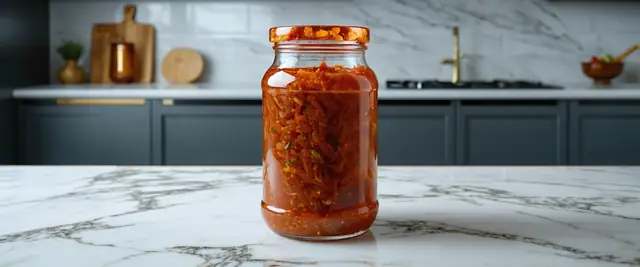
Vietnamese Fermented Shrimp Paste
Tiny shrimp and salt transform slowly into a pungent, funky paste called mam ruoc.
Dietary
Pescatarian, Wheat free, Dairy free, Nut free
Allergens
Shellfish
This traditional Vietnamese condiment relies on nothing more than tiny shrimp, salt, and patient fermentation to develop its deep umami funk. Used sparingly in dipping sauces, stir-fries, and soups, it delivers the same salty backbone found in many coastal Vietnamese dishes. Making it at home requires little hands-on effort but several weeks of undisturbed fermentation time.
Ingredients
- 2 pounds tiny raw shrimp or krill (moi or ruoc shrimp), rinsed and drained
- 1/2 pounds coarse sea salt
- 2 tablespoons sticky rice, toasted and ground (optional, for texture and color)
- 1 tablespoons rice wine or white liquor, for sterilizing jar and hands
Method
-
Rinse the tiny shrimp thoroughly under cold water and drain well in a colander, picking out any debris or non-shrimp matter.
-
Spread the shrimp on a clean towel and let air-dry for 20 minutes to remove excess surface moisture.
-
In a large bowl, toss the shrimp with the coarse sea salt until evenly coated, massaging gently so the salt begins to draw out moisture.
-
If using, stir in the toasted ground sticky rice to help texture and encourage fermentation.
-
Wipe out a large glass or ceramic fermentation crock with rice wine or white liquor to sterilize, then wipe dry with a clean cloth.
-
Pack the salted shrimp tightly into the crock, pressing down firmly to remove air pockets and leaving about 2 inches of headspace.
-
Cover the surface with a clean cloth or plastic wrap pressed directly onto the shrimp, then weigh it down with a small clean plate or fermentation weight.
-
Cover the crock loosely with a lid or breathable cloth and set it in a warm spot out of direct sunlight, around 85 to 95°F, to begin fermenting.
-
Let the mixture ferment for 3 to 4 weeks, stirring once every few days and pressing the shrimp back under any released liquid.
-
Taste the paste after 3 weeks; it should smell pungently savory rather than sharply rotten, and the shrimp should have broken down into a coarse, reddish-pink paste.
-
Once fermented to taste, transfer the paste to clean glass jars, pressing down to eliminate air pockets and topping with a thin layer of oil if storing long-term.
-
Seal jars and refrigerate; the paste will keep for several months and continues to deepen in flavor with age.
Rate this recipe

Vietnamese Fermented Shrimp Paste
This traditional Vietnamese condiment relies on nothing more than tiny shrimp, salt, and patient fermentation to develop its deep umami funk. Used sparingly in dipping sauces, stir-fries, and soups, it delivers the same salty backbone found in many coastal Vietnamese dishes. Making it at home requires little hands-on effort but several weeks of undisturbed fermentation time.
Make ahead 32 oz 18 cal
Ingredients
- 2 pounds tiny raw shrimp or krill (moi or ruoc shrimp), rinsed and drained
- 1/2 pounds coarse sea salt
- 2 tablespoons sticky rice, toasted and ground (optional, for texture and color)
- 1 tablespoons rice wine or white liquor, for sterilizing jar and hands
Method
- 1
Rinse the tiny shrimp thoroughly under cold water and drain well in a colander, picking out any debris or non-shrimp matter.
- 2
Spread the shrimp on a clean towel and let air-dry for 20 minutes to remove excess surface moisture.
- 3
In a large bowl, toss the shrimp with the coarse sea salt until evenly coated, massaging gently so the salt begins to draw out moisture.
- 4
If using, stir in the toasted ground sticky rice to help texture and encourage fermentation.
- 5
Wipe out a large glass or ceramic fermentation crock with rice wine or white liquor to sterilize, then wipe dry with a clean cloth.
- 6
Pack the salted shrimp tightly into the crock, pressing down firmly to remove air pockets and leaving about 2 inches of headspace.
- 7
Cover the surface with a clean cloth or plastic wrap pressed directly onto the shrimp, then weigh it down with a small clean plate or fermentation weight.
- 8
Cover the crock loosely with a lid or breathable cloth and set it in a warm spot out of direct sunlight, around 85 to 95°F, to begin fermenting.
- 9
Let the mixture ferment for 3 to 4 weeks, stirring once every few days and pressing the shrimp back under any released liquid.
- 10
Taste the paste after 3 weeks; it should smell pungently savory rather than sharply rotten, and the shrimp should have broken down into a coarse, reddish-pink paste.
- 11
Once fermented to taste, transfer the paste to clean glass jars, pressing down to eliminate air pockets and topping with a thin layer of oil if storing long-term.
- 12
Seal jars and refrigerate; the paste will keep for several months and continues to deepen in flavor with age.